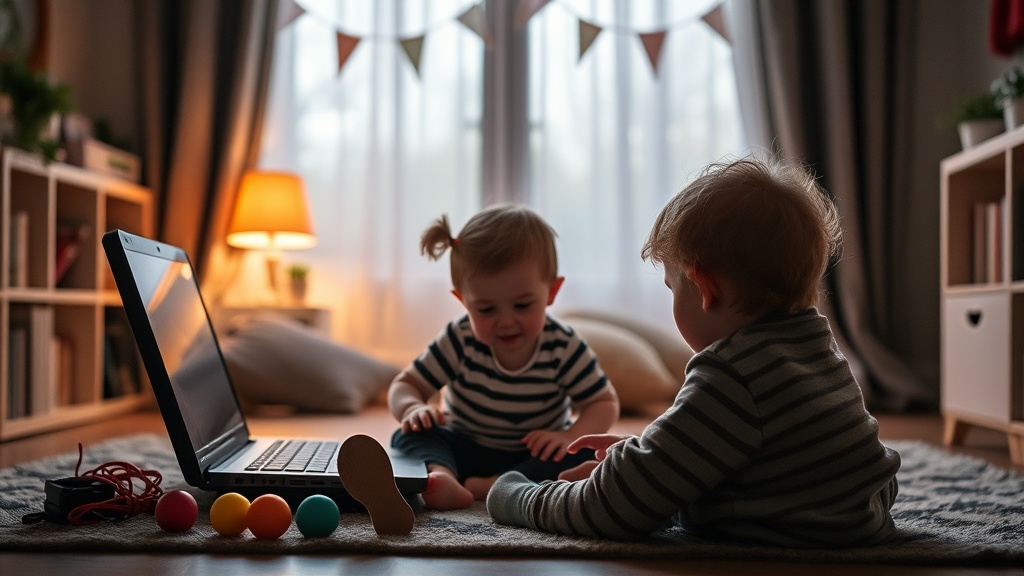
How Do You Keep a Toddler Entertained Without Screens? 10 Indoor Activities That Actually Work

How many times have you handed over a tablet just to get twenty minutes of peace? You are not alone—screens are everywhere, and resisting the digital babysitter feels like an uphill battle. But here is the truth: toddlers do not need apps to stay engaged. Their brains are wired for hands-on exploration, movement, and imagination. This post covers ten screen-free indoor activities that burn energy, build skills, and buy you those precious minutes of uninterrupted time.
Why Should Toddlers Have Less Screen Time?
The American Academy of Pediatrics recommends avoiding screens entirely for children under eighteen months, with limited use thereafter. Why? Because young brains develop through sensory experiences—touching, manipulating, problem-solving in three-dimensional space. Screens deliver passive stimulation. Blocks, water play, and building forts deliver active learning.
Cutting screens is not about being a perfect parent. It is about giving your toddler what their developing brain actually craves. Movement. Creativity. Autonomy. The activities below require minimal setup, use household items, and scale from independent play to parent-child interaction.
What Household Items Make the Best Toddler Toys?
1. The Cardboard Box Transformation
That Amazon box is not trash—it is a spaceship, a grocery store, a cozy reading nook. Hand your toddler markers, stickers, and washi tape. Let them decorate the interior. Cut a door and window with a box cutter (supervised, obviously). Suddenly, they have a fort that occupies them for an hour.
Boxes teach spatial reasoning. Crawling inside gives proprioceptive feedback—the sense of where their body is in space. This matters more than you think. Kids who understand their bodies move with more confidence and spill less juice on your carpet.
2. Kitchen Utensil Orchestra
Pull out the plastic containers, wooden spoons, and measuring cups. Turn the kitchen floor into a percussion studio. Toddlers love cause and effect—hitting a pot produces sound. Hitting it harder produces louder sound. This is physics disguised as chaos.
Set boundaries: one cabinet only, everything goes back when done. The sensory feedback (different sounds, weights, textures) builds neural connections. Plus, drumming burns energy. Energy burned equals better naps. Better naps equal happier parents.
3. The Mystery Bag Game
Fill a pillowcase with safe household objects—a wooden block, a soft ball, a spoon, a sock. Have your toddler reach in without looking, feel an object, and guess what it is. This builds tactile discrimination—the ability to identify objects through touch alone.
Start with five objects they know well. Increase difficulty as they master the game. It feels like magic to them. You are secretly developing their fine motor planning and descriptive vocabulary when they explain what they feel.
How Can I Encourage Independent Play in Small Spaces?
4. Sticky Note Wall Art
Buy a pack of sticky notes in bright colors. Tape a large sheet of paper to the wall—or use the wall itself if you are feeling brave. Show your toddler how to stick, peel, and restick. They will cover the surface, make patterns, and—inevitably—stick them to their forehead.
This works in apartments. It works in kitchens while you cook. The vertical surface encourages wrist extension, which strengthens the muscles needed for writing later. Occupational therapists call this "pre-writing skills." You call it ten minutes to unload the dishwasher.
5. The Tape Road Rescue
Masking tape on the floor becomes roads, rivers, or tightropes. Painter's tape peels off without residue—use it with confidence on hardwood or tile. Build a road network for toy cars. Make zigzag lines to balance-walk. Create boxes labeled "jump here" or "spin here" for a homemade obstacle course.
Toddlers need big movement. When weather traps you inside, floor tape becomes your MVP. The visual boundary helps them understand spatial limits—an abstract concept made concrete with a two-dollar roll of tape.
6. Sensory Bin Basics
Fill a shallow storage bin with dried rice, pasta, or lentils. Add scoops, funnels, and small containers. Sit your toddler at the table or on a sheet for easy cleanup. Let them pour, dig, and bury small toys.
Sensory play is not just messy fun—it regulates the nervous system. The repetitive motions (scooping, pouring) have a meditative quality. Many toddlers focus longer with sensory materials than with plastic toys. Pro tip: add a hidden object to find—plastic animals, puzzle pieces, colored pom-poms—and you have bought yourself thirty focused minutes.
What Activities Build Both Skills and Engagement?
7. The "Help" Station
Toddlers want to do what you do. Set up a cleaning station with a spray bottle (water only), a microfiber cloth, and a small broom. Give them a window or baseboard to "clean." Hand them a laundry basket and a pile of socks to match.
This is not pretend play—it is real contribution, scaled to their ability. Research from ZERO TO THREE shows that toddlers who participate in household tasks develop stronger executive function skills. They learn sequencing, persistence, and the satisfaction of completing a job. Your baseboards get slightly cleaner. Everyone wins.
8. Water Transfer Games
Set two bowls in the sink or bathtub. Give your toddler a sponge, turkey baster, or small cup. Show them how to move water from one container to the other. This simple activity builds hand strength, coordination, and concentration.
Water play has a calming effect on most children. The temperature, the sound, the visual flow—it engages multiple senses simultaneously. Keep towels handy. Expect wet sleeves. Consider it the price of twenty quiet minutes and stronger finger muscles.
9. Nature Treasure Sorting
Collect leaves, rocks, and pinecones on your next walk. Store them in a basket for rainy days. Give your toddler an egg carton or muffin tin and ask them to sort by size, color, or texture. They will examine each object, make decisions, and arrange their collection.
This connects indoor play to the natural world. It builds categorization skills—an early math foundation. The Nature Conservancy emphasizes that early nature connection predicts environmental stewardship later in life. Your toddler thinks they are playing. You are raising a future planet caretaker.
10. The Book Picnic
Spread a blanket on the floor. Pile every board book you own in the center. Let your toddler choose, flip through pages, and "read" to themselves or stuffed animals. Rotate the selection weekly to maintain interest.
Independent book exploration builds print awareness—understanding that books have a front, back, and pages that turn in order. It also creates positive associations with reading. When books feel like choice rather than obligation, literacy develops naturally. Join them occasionally—ask about pictures, connect stories to their life—but let them lead the experience.
How Do I Make Screen-Free Time Actually Work?
Start small. Replace one screen session with one activity. Rotate options so nothing goes stale. Store supplies where your toddler can access them independently—low shelves, open baskets, visible bins.
Expect resistance at first. Screens are designed to be addictive, and breaking habits takes time. Stay consistent. Offer choices: "Do you want the water transfer or the sticky notes?" Choices create buy-in. Follow their interests—if they love animals, hide plastic dinosaurs in the sensory bin. If they love movement, expand the tape obstacle course.
Remember that boredom is not the enemy. It is the gateway to creativity. When toddlers face empty time without digital stimulation, they eventually invent games, build worlds, and discover internal resources. Your job is not to entertain constantly—it is to create the conditions where their own imagination can take over.
Screen-free parenting is not about perfection. It is about presence—giving your child the gift of undistracted exploration and giving yourself the satisfaction of watching them grow. The American Academy of Pediatrics offers additional guidance on creating family media plans that work for your specific household.
Pick one activity from this list. Try it tomorrow. Notice what happens when your toddler's hands get busy and their mind gets curious. That is the sound of development happening—no charging cable required.