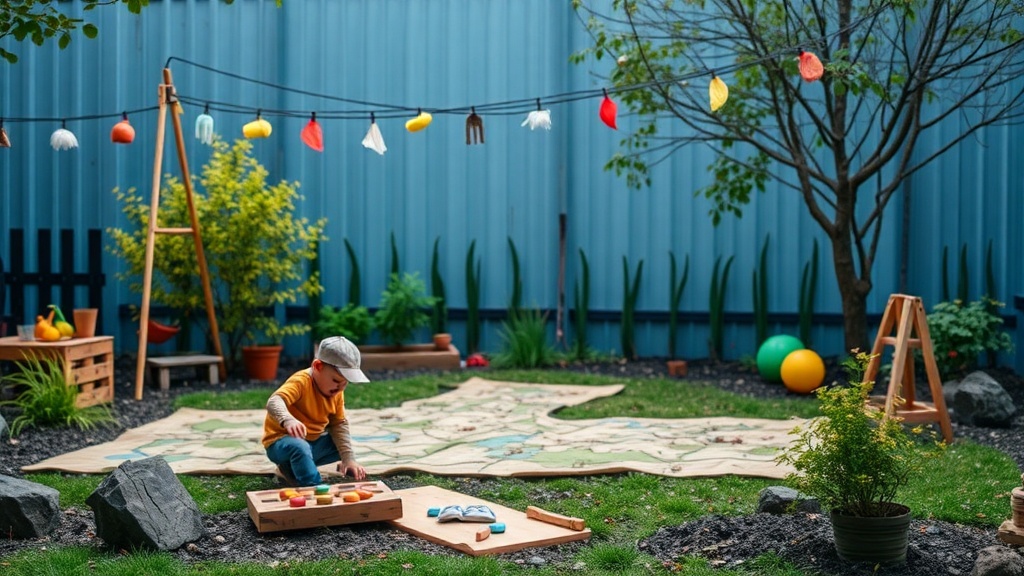
Building a Backyard Adventure Map for Curious Toddlers

Imagine your two-year-old standing in the middle of the grass, staring blankly at a pile of leaves while you struggle to keep them engaged. You want them to play, but they're stuck in a loop of repetitive movements or, worse, a meltdown because they're bored. A Backyard Adventure Map turns your standard outdoor space into a structured, high-engagement scavenger hunt that encourages exploration without requiring you to buy expensive new toys. It's a way to turn a simple patch of yard into a learning environment through guided discovery.
This isn't about a high-tech scavenger hunt app. It's about a physical, tactile map—made of cardboard or heavy cardstock—that helps a toddler recognize patterns, textures, and natural objects. By giving them a "mission," you're actually supporting their cognitive development and fine motor skills through way more intentional play.
How Do You Make a Backyard Adventure Map for a Toddler?
You make a map by drawing or gluing pictures of specific items found in your yard onto a sturdy piece of cardboard. Start with a base of a recycled cereal box or a piece of heavy cardstock from a craft store like Michael's. The goal is to create a visual checklist that matches the real world.
First, pick five to seven "targets." For a toddler, keep it simple. Think: a smooth stone, a yellow flower, a brown twig, a green leaf, and maybe a ladybug or a specific shaped pebble. If you try to include twenty items, they'll lose interest before they even hit the halfway mark. (Trust me, I've been there with my own kids).
Here is a quick way to structure your map-making session:
- The Base: Use a piece of cardboard that can withstand a little bit of dirt or moisture.
- The Icons: Draw a simple version of the object or, even better, use a real one. If you find a cool leaf, glue it directly onto the map.
- The Interaction: Use a "check-off" system. A toddler might not be able to use a pen to make a checkmark, so use Velcro dots or even just a small pouch where they can drop a pebble once they "find" the item.
- The Reward: The reward isn't a toy. It's the satisfaction of completing the map.
If your child is more interested in the sensory side of things, you might want to look into child development milestones to see how much tactile stimulation they actually need at this age. Sometimes, a map that focuses on textures—rough bark versus smooth stone—is more effective than one focused on colors.
What Items Should You Include on a Nature Map?
Include a mix of textures, colors, and shapes to ensure the map hits different sensory developmental needs. You want a balance of things that are easy to find and things that require a little bit of "searching" eyes.
A good map should feel like a treasure hunt, but with very clear boundaries. If you have a large yard, don't make the map too complex. A toddler's attention span is short—sometimes only a few minutes—so the "adventure" needs to be quick and high-impact.
| Category | Example Items | Learning Skill |
|---|---|---|
| Texture | Rough bark, smooth stone, crunchy leaf | Sensory processing |
| Color | Yellow flower, green grass, brown dirt | Color recognition |
| Shape | Round pebble, pointy twig, flat leaf | Geometry/Spatial awareness |
| Movement | A bird, a crawling bug, a swaying branch | Observation skills |
I usually keep a small basket or a sturdy Patagonia backpack nearby. As they find the items, they can collect them (if they're safe and non-toxic, of course) to show you. This adds a layer of "collecting" that keeps them moving.
If you're worried about the mess or the safety of the items, just keep a quick eye on them. A little dirt under the fingernails is fine, but we want to avoid anything that could be a choking hazard or something sharp.
Does This Activity Help with Development?
Yes, because it combines physical movement with cognitive recognition of patterns and categories. When a child looks for a "red object" or a "fuzzy object," they are practicing categorization, which is a fundamental building block for math and reading later on.
It’s also a great way to practice finding joy in the chaos of playtime. Instead of a structured, rigid lesson, it's a loose, organic way to learn. They aren't sitting at a desk; they're squatting in the dirt, looking under rocks, and stretching to reach a low-hanging branch. This builds gross motor skills and hand-eye coordination simultaneously.
The beauty of the map is that it's adaptable. If your toddler is having a high-energy day, the map becomes a scavenger hunt where they have to run to the "big tree" to find the next clue. If they're feeling more low-key, it becomes a quiet observation task where they sit and look for a tiny beetle.
It also helps with focus. In a world where screens are everywhere, teaching a child to focus on a single, small object—like a specific type of leaf—is a huge win. It trains their eyes to see details that most adults would walk right past.
One thing to note: don't feel like you have to make a new map every single time. You can reuse the same cardboard base and just swap out the "clues" or the items they are looking for. This saves you time and keeps the "adventure" feeling fresh without the constant prep work.
Sometimes, the best way to keep a toddler occupied isn't a new toy, but a new way to look at the world they already have. A cardboard scrap and a bit of imagination can do more for their development than a dozen plastic gadgets.